Breville Barista Express vs Ninja Luxe Café vs De’Longhi La Specialista Touch: Which Should You Buy?
Espresso machines with built-in grinders promise café-style drinks at home, but they range from beginner-friendly to genuinely fiddly. This comparison is for anyone choosing their first serious home machine, and it covers three popular options: the Breville Barista Express, the Ninja Luxe Café Premier, and the De’Longhi La Specialista Touch.
Disclosure: I earn from qualifying purchases as an Amazon Associate, at no extra cost to you. See my Affiliate Disclosure. I haven’t tested these machines myself. This comparison is based on manufacturer specs and my analysis of owner and professional reviews.
The short version
- Best for learning real espresso skills: Breville Barista Express. It gives you manual control and a pressure gauge to learn from.
- Best for variety and convenience: Ninja Luxe Café Premier. It also makes drip coffee and cold brew, and it has a hands-free milk frother.
- Best for guided, hands-on espresso: De’Longhi La Specialista Touch. A touchscreen walks you through dialing in your beans, and reviewers praise its steam wand.
Side-by-side comparison
| Feature | Breville Barista Express (BES870XL) | Ninja Luxe Café Premier (ES601) | De’Longhi La Specialista Touch |
|---|---|---|---|
| Built-in grinder | Conical burr, adjustable | Conical burr, 25 settings, dosing by weight | Conical burr, 15 settings |
| Pump pressure | 15 bar | 9 bar | 15 bar |
| Heating system | Thermocoil, single boiler | Thermoblock | Thermoblock |
| Milk frothing | Manual steam wand | Hands-free automatic frother | Automatic with 5 froth levels and 4 temperatures, plus a manual mode |
| Other drinks | Hot water spout | Drip coffee and cold brew | 10 preset recipes, including cold brew in under 5 minutes |
| Tamping | Manual (tamper included) | Assisted tamper | Precision tamper with dose feedback |
| Guidance | Pressure gauge | Automated dosing | 3.5-inch touchscreen with Bean Adapt dial-in guide |
| Learning curve | Moderate | Gentler, more automated | Gentle to moderate, guided |
| Approx. weight | About 22 lb | About 26 lb | About 23 lb |
A note on “bar” pressure: a bigger number on the box isn’t automatically better. Espresso is generally extracted at around 9 bar at the coffee, and the higher figures some machines advertise describe what the pump can do, not what reaches your shot.
Breville Barista Express (BES870XL)
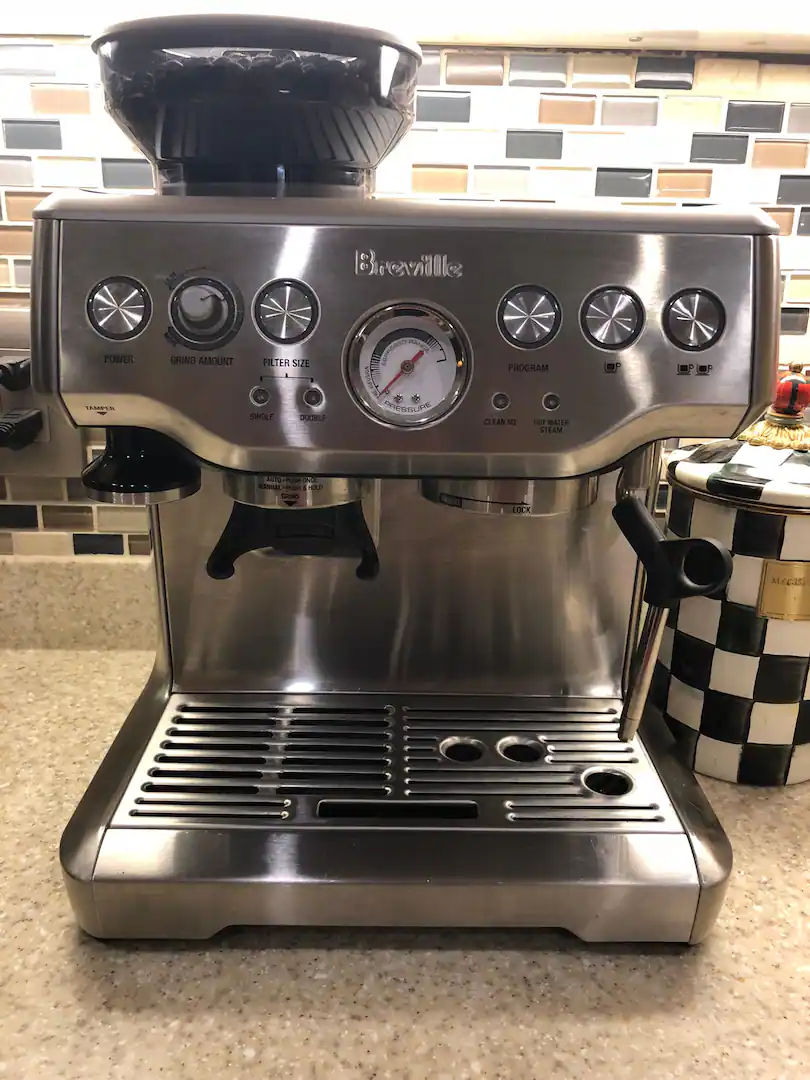
This is one of the best-known all-in-one machines for people who want to learn espresso properly. The grinder, tamper, and pressure gauge are all built in, so you can see what each change in grind size does to your shot.
Pros
- Pressure gauge helps you learn and troubleshoot your shots
- Integrated grinder and a dedicated hot water spout for Americanos or tea
- Long track record and a very large base of owner reviews
Cons
- Single boiler, so you can’t pull a shot and steam milk at the same time
- Some owners find the steam wand underwhelming for latte art
- Takes practice to get consistent results
Ninja Luxe Café Premier (ES601)
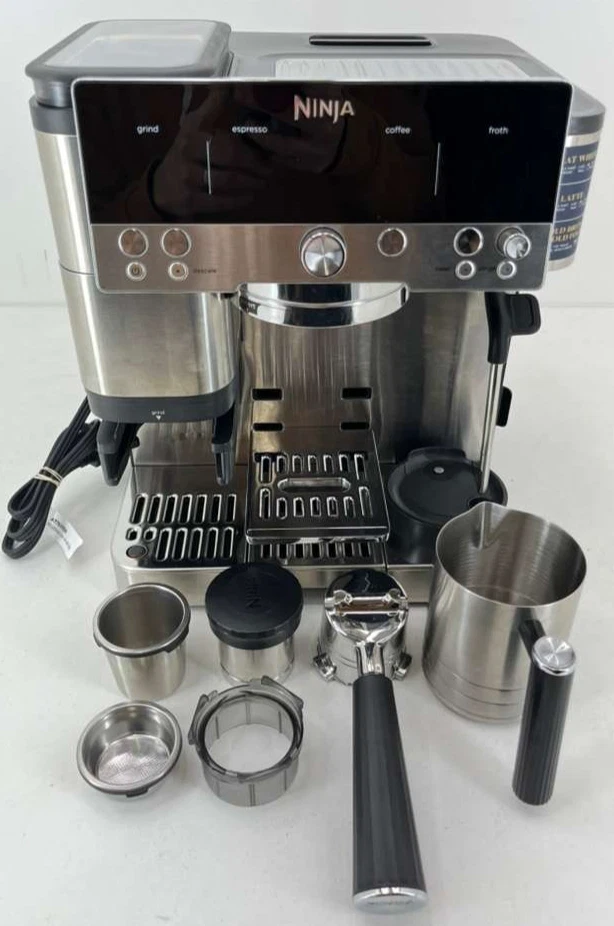
Ninja takes a more automated approach. Beyond espresso, it brews drip coffee and cold brew, and it weighs the dose for you and includes an assisted tamper and a hands-free frother. It suits households where not everyone wants to learn barista technique.
Pros
- Three-in-one: espresso, drip coffee, and cold brew
- Weight-based dosing and assisted tamping make results more consistent for beginners
- Hands-free milk frothing for dairy or non-dairy milk
Cons
- Uses its own basket design, so you can’t simply swap in baskets from other machines
- Less hands-on control, which advanced users may find limiting
- Newer than the Breville, so there’s less long-term durability data
De’Longhi La Specialista Touch
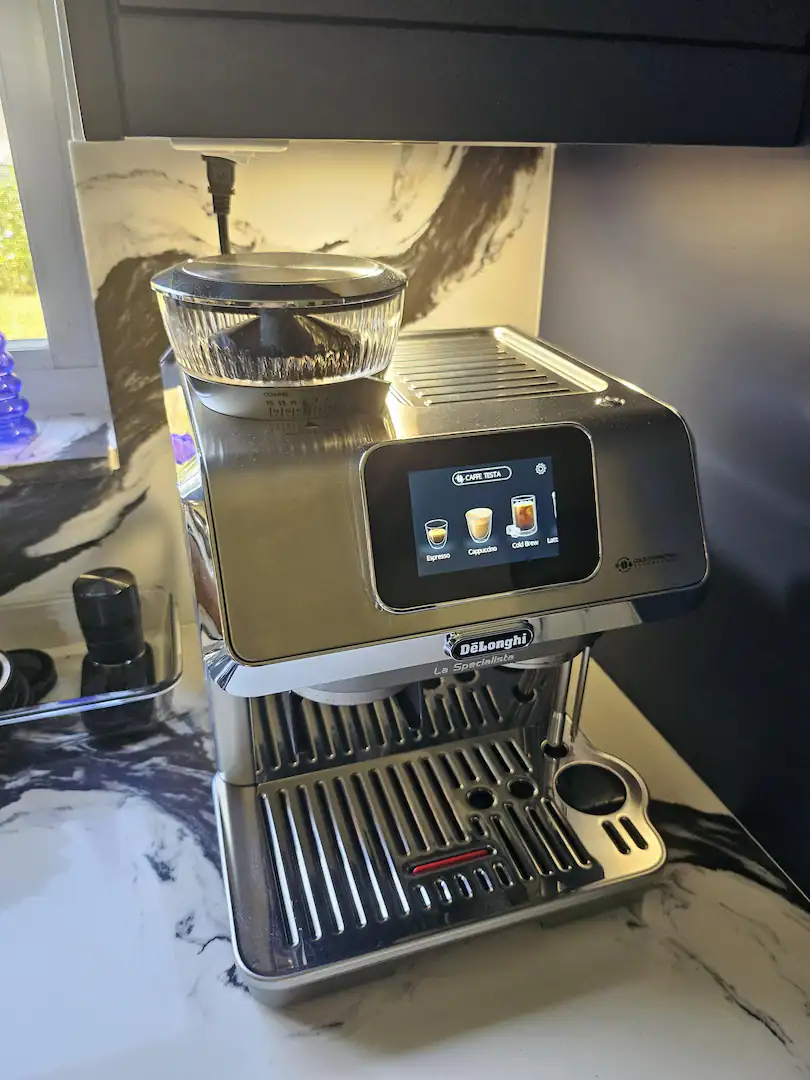
The Touch sits between the other two. It’s a semi-automatic machine that grinds, doses, brews, and froths, but a large touchscreen coaches you through setup and suggests adjustments based on your beans. Reviewers like that it helps beginners get good shots while leaving room to grow, and several single out the steam wand, which has both automatic and manual modes.
Pros
- Guided “Bean Adapt” setup helps you dial in grind, dose, and temperature for different beans
- Strong steam wand with automatic and manual options, praised by several professional reviewers
- 10 preset recipes, six saved bean profiles, and a quick cold brew mode
Cons
- No simple way to rinse the group head between drinks, according to one reviewer
- The steam wand’s temperature probe can get in the way when frothing by hand
- The grinder is hard to access for cleaning, and some reviewers found the dosing tools fiddly
- A newer model, so there are fewer owner reviews and less long-term reliability data
Which one should you buy?
- If you want to learn espresso and enjoy tinkering: the Breville, because it gives you the most hands-on control and the most community knowledge.
- If you want coffee variety with minimal fuss: the Ninja, because drip, cold brew, and automatic frothing suit busy households.
- If you want guidance now and skill to grow into: the De’Longhi, because the touchscreen coaching and flexible steam wand fit people who want to improve over time.
How I researched this
I compared manufacturer specifications and read through professional and owner reviews, paying particular attention to recurring complaints rather than one-off bad experiences. Prices change often, so check the current price on Amazon before buying.
Last updated: November 9, 2026